The Art of "Digital Minimalism": How to Reclaim Your Focus in a Loud World
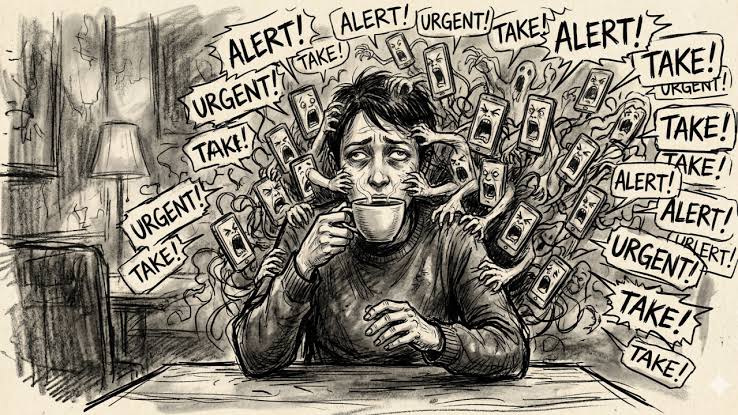
We live in an era of constant inputs. From the moment we wake up and check our smartphones to the endless stream of tabs open on our desktop screens, our brains are constantly being bombarded with data, notifications, and micro-distractions.
While technology has made us more efficient than ever, it has also introduced a subtle, constant friction: the fragmentation of our attention.
True productivity and peace of mind don't come from installing another time-tracking app or squeezing more tasks into your day. Instead, they come from a concept known as Digital Minimalism—the practice of ruthlessly clearing away digital clutter so you can focus on what actually matters.
1. The Cost of "Context Switching"
Every time you are deep in a task—whether you're writing code, designing a graphic, or planning a project—and you pause to check a quick notification, you pay a heavy mental tax.
Psychologists call this context switching. Even if you only look at your phone for five seconds, a residue of your attention stays stuck on that notification. Studies show it can take up to 23 minutes to regain deep focus after a single distraction. By intentionally limiting your inputs, you aren't missing out; you are actively protecting your cognitive energy.
2. Designing a Low-Friction Environment
Your environment heavily dictates your behavior. If your workspace is cluttered with digital noise, your brain will naturally seek the path of least resistance (which usually means scrolling or clicking away from hard work).
You can design a high-focus lifestyle with a few deliberate changes:
The "One-Screen" Rule: When working on a high-priority task, minimize every window that isn't directly related to what you are doing. Close the extra browser tabs. Treat your screen space like a premium workspace.
Batching Communications: Instead of leaving your email or messaging apps open all day, check them at specific intervals—say, once in the morning, once after lunch, and once before you wrap up.
Analog Spaces: Dedicate certain areas of your life or home to be entirely tech-free. Whether it’s a desk where you brainstorm with a physical notebook or keeping screens out of your bedroom, creating physical boundaries helps your brain shift from "high-alert" mode to deep rest.
"Simplicity is the ultimate sophistication." — Leonardo da Vinci
3. Embracing Active Rest
In a culture obsessed with optimization, we often treat rest as a waste of time. But true lifestyle balance requires understanding that your brain needs downtime to process information, solve complex problems, and prevent burnout.
Active rest isn't about passively consuming content on a couch; it’s about engaging in offline activities that recharge you. Tinkering with a physical hobby, going for a walk without headphones, or simply enjoying a quiet meal gives your mind the space it needs to synthesize ideas. Some of your best breakthroughs will happen when you step away from the keyboard.
The Takeaway
Digital minimalism isn't about giving up the tools that make your life easier or your work better. It’s about ensuring that you are using the tools, rather than the tools using you. By taking control of your digital environment, you unlock the focus needed to build meaningful things and the headspace to actually enjoy the process.
The Art of "Digital Minimalism"
Sponsored Advertisement
Sponsored Advertisement
Comments (0)
No responses registered on this thread yet. Be the first to start the conversation.